Pain isn’t a reliable compass. Many runners feel “fine” long before their Achilles can handle the force of a landing.
To ensure a safe Achilles return to running, we use a 5-step objective Running Assessment.
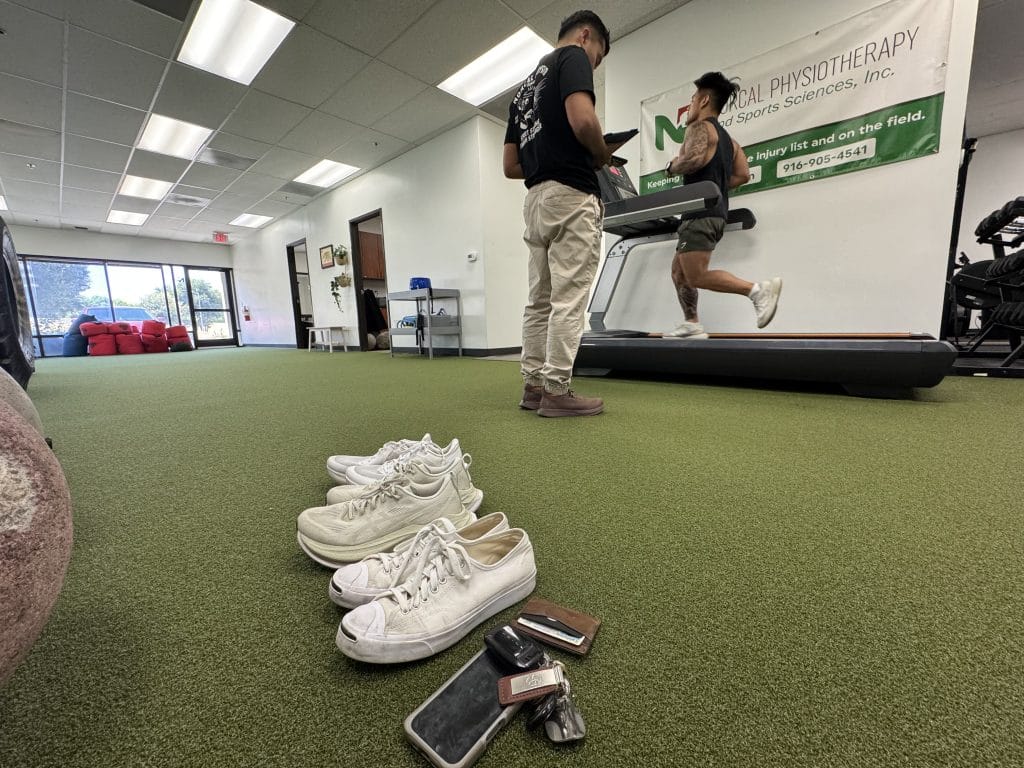
Curious what a Running Assessment looks like? Watch this 8min video
This is what our Running Assessment consists of:
- Tissue Sensitivity and Load Tolerance:
- We start by testing how reactive the tendon is under manual pressure and controlled stress. If the tendon is no longer “cranky,” we can shift from protection to aggressive loading.
- Single Leg Stability:
- Running is a series of single-leg hops. We test balance for 15 seconds to identify:
- Ankle and hip control.
- Side-to-side asymmetries.
- Hidden compensations that overload the Achilles.
- Running is a series of single-leg hops. We test balance for 15 seconds to identify:
- Calf Strength & Endurance:
- Calf capacity is the #1 predictor of Achilles health. We don’t just count heel raises; we look for “cheat” movements, like knee bending or using momentum, to ensure the strength is functional.
- Motion Sensor Analysis:
- We use a trunk mounted accelerometer to capture what the human eye misses. This gives us objective data on symmetry and how efficiently you transfer energy during movement.
- Plyometric Capacity Testing (The Spring Test)
- Strength isn’t enough. Your tendon must act like a spring! We use jumping tests with minimal ground contact time to evaluate tendon elasticity and explosive power.
Ready to stop wondering if your Achilles is ready and start knowing? Book your assessment in Sacramento today to find the gaps in your training and bridge them with objective data.
Wait…. Did you miss the ‘Why’? Testing your readiness is step two. Step one is understanding how the injury started so you can prevent the cycle from repeating. Click the blog below to catch up!
- Relentless Achilles Pain: Why It Keeps Coming Back For Runners (Part 1 of 2)
- Achilles Return To Running: 5 Tests to Know You’re Really Ready (pt 2 of 2)
- Why Achilles Pain in Runners Keeps Coming Back: Part 1 of 2
- The Brain-Body Contract: Why Your Body Compensates (And How To Fix It)
- 5 Signs Your Headache Is Actually A Neck Issue (Cervicogenic Headaches)
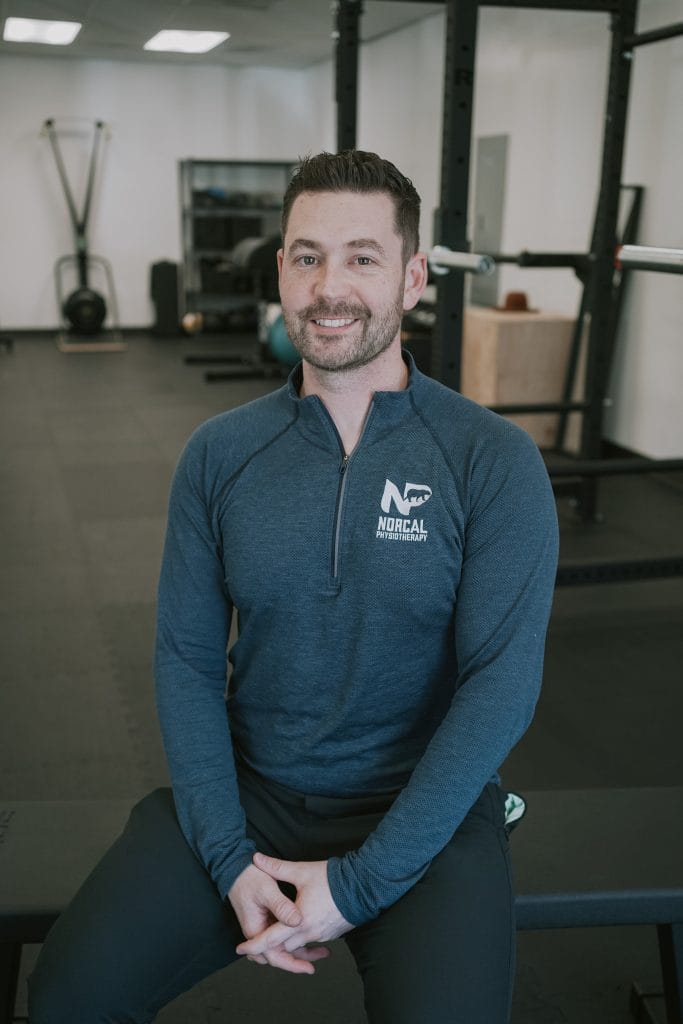
The Author:
Dr. Caleb Kauffmann is the owner of NorCal Physio and specializes in helping athletes improve performance while reducing injury risk. He works extensively with combat, barbell, and endurance athletes using a performance-focused rehabilitation approach.