Why Achilles Pain Keeps Coming Back for Runners (And What Most Athletes Miss)
When runners develop Achilles pain, most assume the problem is the tendon itself. Makes sense, right?
The soreness shows up after a run. It feels tight in the morning. Maybe it flares up during speedwork or up hills. So naturally, the focus becomes stretching the calf, resting, or using this as a flimsy excuse to buy a new pair of running shoes.
And sometimes those strategies help in the short term. But for many runners, Achilles pain keeps comin’ back! And often, stronger than before.
That’s because Achilles injuries rarely start with just the tendon alone. They usually begin when the body loses its ability to answer the demands of running efficiently.
Here’s a story of a runner who demonstrated exactly how this process unfolds.
THE ATHLETE STORY:
When May first arrived at our clinic weeks earlier, her Achilles pain sat at an 8 out of 10.
Even light pressure on the tendon was uncomfortable. Running was limited and confidence was speedily dropping.
Fast forward to this appointment, she returned for a full Running Assessment at NorCal Physio. She was feeling dramatically better. Her pain had dropped to about a .5 out of 10, making it noticeable but not limiting.
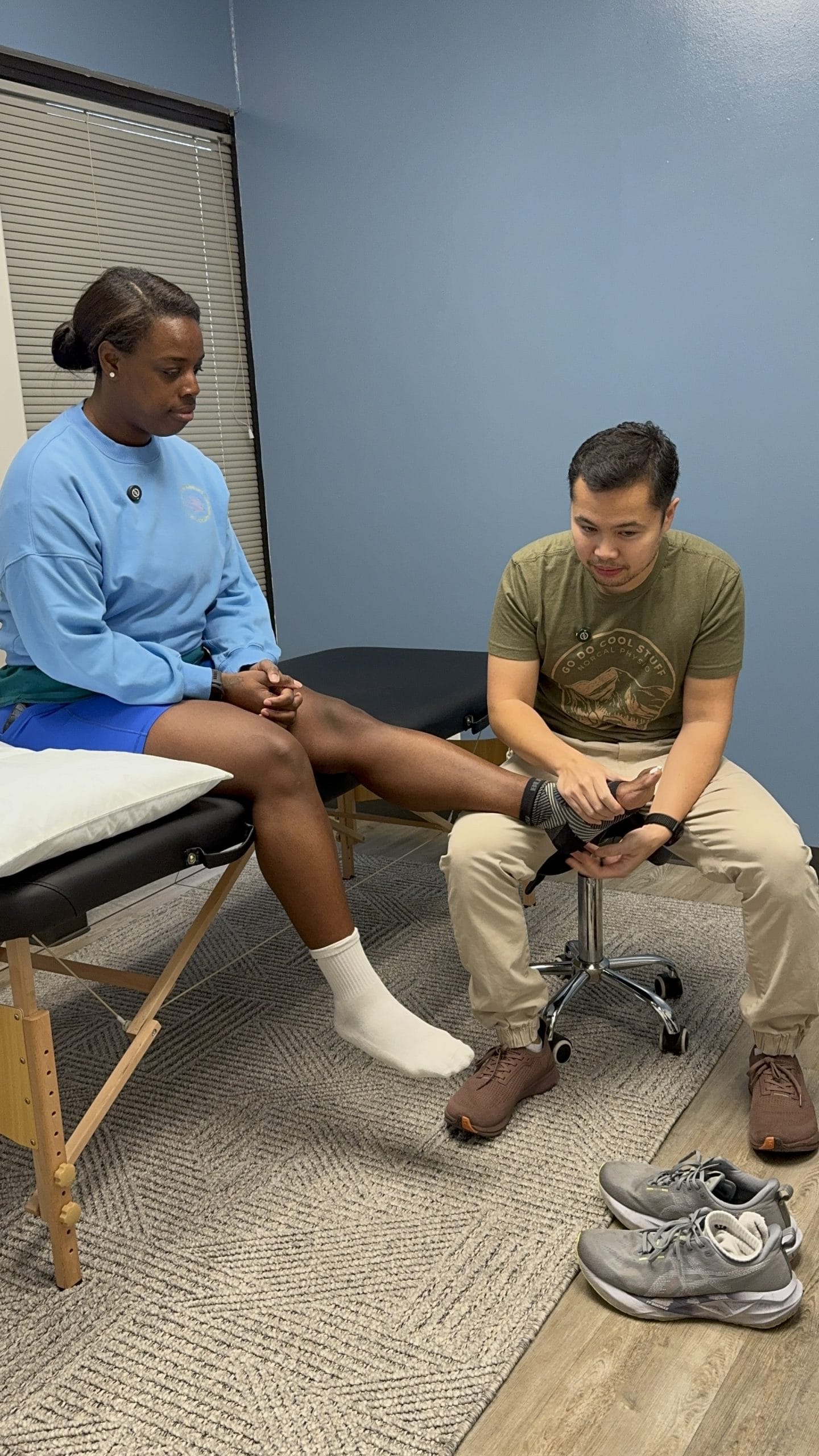
For many runners, this is the moment they jump full force back into training. BUT: pain reduction does not always equal readiness.
Our goal was to answer one important question: Was her body actually prepared to handle running again, or had we just quieted symptoms?
THE REAL CAUSE OF MOST ACHILLES INJURIES
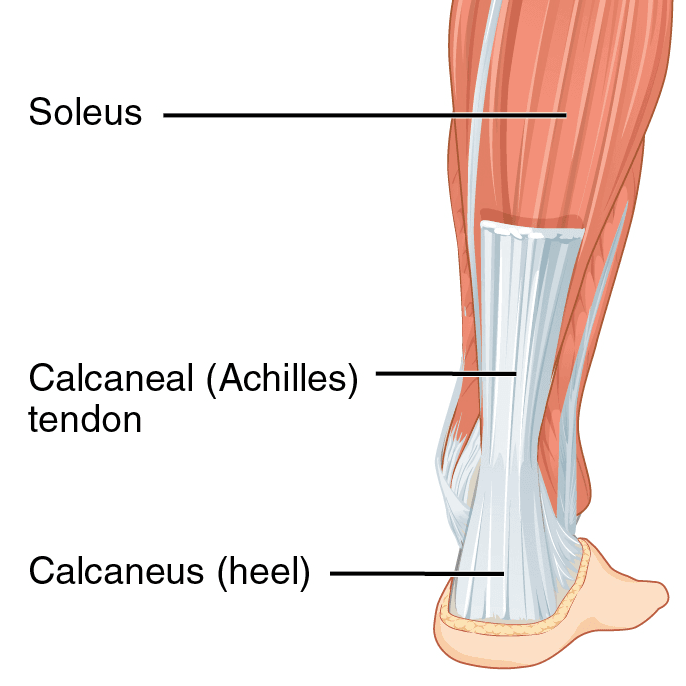
The Achilles tendon acts like a spring during running. Every step requires it to store energy, release it and propel the body forward. Over the course of a run- that tendon absorbs thousands of high force loading!
Achilles pain often develops when there is a mismatch between:
- Training Intensity and Tissue Capacity
- Calf Strength and Endurance
- Stability through the Foot, Ankle and Hip
- The Body’s Ability to Absorb Force
Makes sense why the tendon often is just the structure that becomes overloaded- and NOT the original source of dysfunction, right?
-Why Improvement In Pain Just Isn’t Enough:
Tendons respond differently than muscles. They can become less painful before they become fully capable of handling load again.
This creates a dangerous window where athletes feel ready but the tissue has not fully rebuilt its strength or elasticity. Returning to high-intensity training during this phase is one of the most common reasons Achilles injuries become chronic.
That is why we begin every running evaluation by testing load tolerance rather than relying solely on pain reports.
-Small Deficits Creating BIG Problems:
One of the biggest surprises for runners is how subtle performance deficits can massively impact the Achilles tendon.
Even small issues like:
- Minor strength differences between calves
- Slight instability on one leg
- Poor force absorption during landing
- Compensations through the foot or knee
These can gradually increase stress on the tendon over thousands of steps.
And many times, these deficits just simply go unnoticed until pain appears.

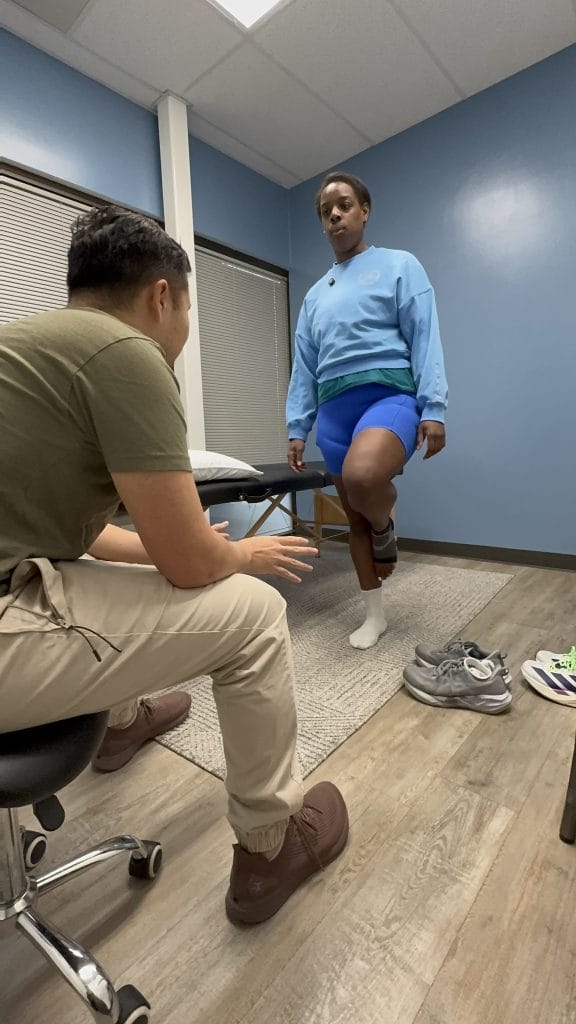

The Confidence Trap Many Runners Fall Into
Our athlete had made AMAZING progress. Her pain was minimal and she was excited to push forward. She even joked about wanting to earn an “A+” during her running assessment.
And this is one of the reasons we LOVE runners. This mindset of being willing to work hard and push limits is both a strength and a risk- as it can sometimes accelerate injury reoccurrence if the body just isn’t ready!
The goal of performance based rehab isn’t to slow athletes down. It’s to make sure their training aggression is supported by physical capacity.
What Runners Actually Need to Prevent Achilles Pain:

For true recovery from Achilles injury and pain, you’ll need to bring harmony back to these:
- Strength and Endurance of the calf complex
- Single Leg Stability and Balance
- Efficient force absorption during impact
- Rebound Capacity for Running
Simple, right?
How do we measure whether a runner is truly ready to return to full training?
That answer requires a structured performance assessment that looks at how the entire body manages load, stability, and power production.
In Part 2 of this series, we break down exactly how we evaluate runners recovering from Achilles pain and what each test reveals about injury risk and performance readiness.
GET IN TOUCH
Stop Guessing and Start Getting Answers
Not sure where to start? Our Discovery Call helps us determine if we’re the right fit for your goals.
Recurring Achilles pain can be frustrating, especially when it feels like you’re doing everything right. If you’re ready to stop managing flare-ups and start building a stronger, more resilient running foundation, we are here to help.
About the Author
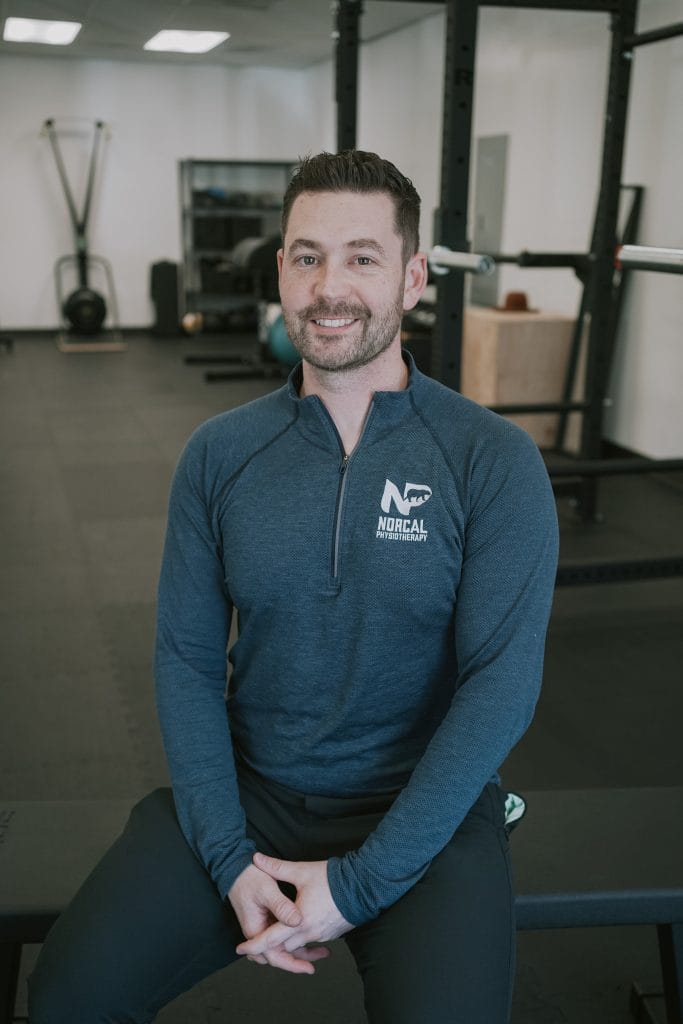
Dr. Caleb Kauffmann is the owner of NorCal Physio and specializes in helping athletes improve performance while reducing injury risk. He works extensively with combat, barbell, and endurance athletes using a performance-focused rehabilitation approach.